
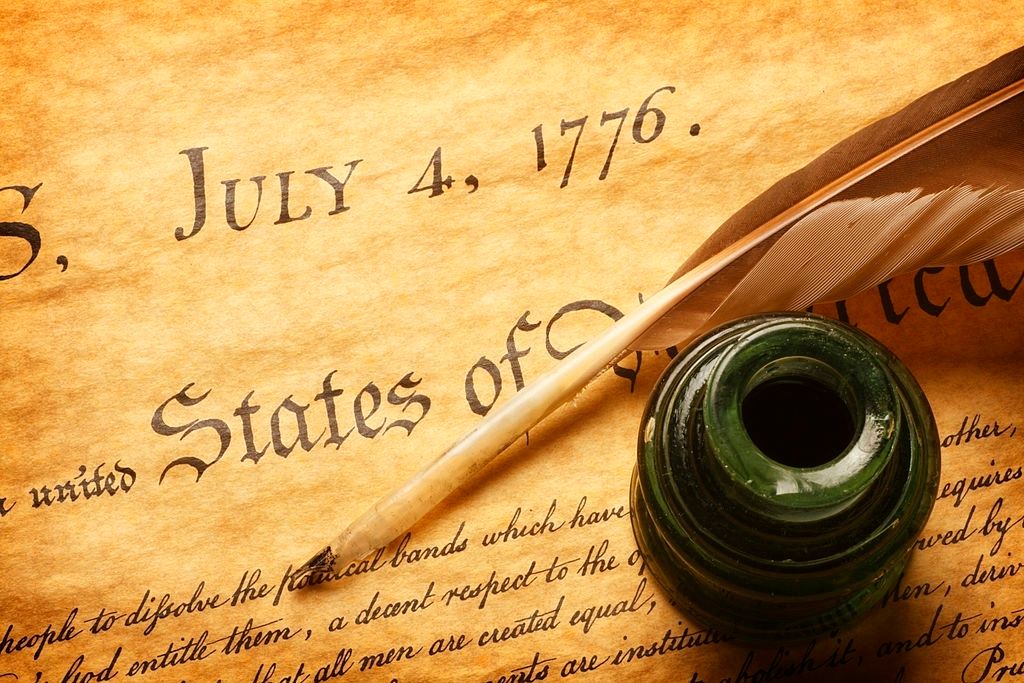
Happy Independence Day 2026 USA: Celebrate with History, Traditions, Fireworks
It is hard to believe for people like us, who see America as one of the few most powerful countries around the world that America was once not independent. Yes, you read it correctly. The 13 American colonies were ruled by the British leaders until the late eighteenth century. They didn’t have their own laws. Congress leaders wanted to change it and thus, wrote the declaration of independence. Which was later approved by the congress and America started celebrating their Happy Independence Day.
| Name | Independence Day (USA) |
|---|---|
| When | Every year on July 4 |
| Next date | Sunday, July 4, 2027 · in 241 days |
| Type | Public Holidays |
| Observed in | 🇺🇸 United States |
| Topic | Patriotic & History |
As Independence Day is one of the biggest federal holidays, the Americans celebrate it grandiosely with a huge parade and fireworks. Every corner of American society is reflected in the parade of Happy Independence Day. After all, patriotism does not discriminate. While Washington’s constitution Avenue plays host to the beauty and innovation people there reflect freedom, they have learned to live for.
When Is Independence Day?
On the 4th of July, the United States observes a federal holiday in honor of the Declaration of Independence. This holiday commemorates the adoption of the Declaration of Independence on July 4, 1776, by delegates from the 13 colonies. Happy Independence Day 2026 USA.
Note: If the Fourth of July falls on a Sunday, the federal observed holiday is the following Monday, July 5. If the Fourth of July falls on a Saturday, the observed holiday for most federal employees (but not all) is Friday, July 3.
| Year | Independence Day (U.S.) |
| 2021 | Saturday, July 4 |
| 2021 | Sunday, July 4 |
| 2022 | Monday, July 4 |
History of Independence Day
The 4th of July is Independence Day of the United States of America. The history of Independence Day for most of the countries is pathetic. If you want to know the history of American Independence in brief, you can go through this article. On 2nd July in 1776, the Continental Congress showed the courage to vote in favor of independence. After two days of this incident, delegates from the 13 colonies also adopted the Declaration of Independence.
Everything at that time was drafting through a historic document by Thomas Jefferson. From that time of 1776 to the present day, 4th July has been celebrating as the birth of American independence. Since then, American citizens are celebrating the day with pride and enthusiasm. Many also try to learn more about their history of independence on this day.
Read more: Independence Day America Speech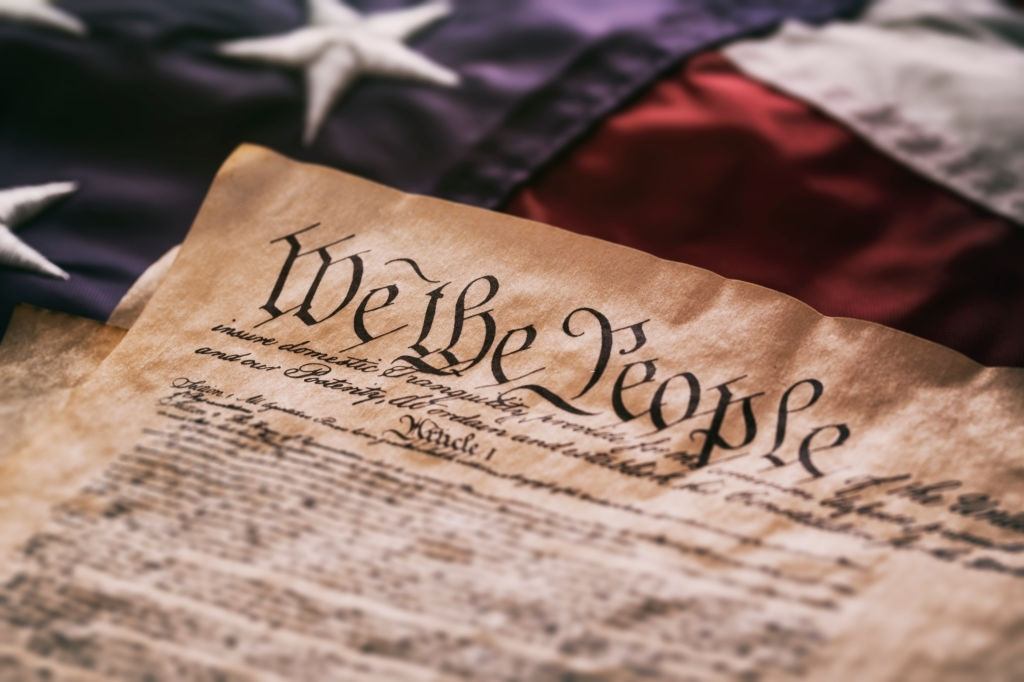
The Declaration of Independence Was Not Officially Signed on July 4
On April 19, 1775, during the Battles of Lexington and Concord (Mass.), the first shots were fired between colonists and British troops, starting the American Revolution. After these first military conflicts, tension between Britain and her American colonists continued to mount.
Finally, on July 2, 1776, the Second Continental Congress voted for independence from Britain.
Two days later, on July 4, the Congress approved the final draft of the Declaration of Independence, which had been written by Thomas Jefferson and edited by John Adams and Benjamin Franklin.
On July 8, the first public reading of the Declaration took place at the Pennsylvania State House (now Independence Hall) in Philadelphia, Pennsylvania. Later that same day, other readings occurred in Trenton, New Jersey, and Easton, Pennsylvania.
Printer John Dunlap made about 200 copies of the Declaration with the date of July 4. Known as the “Dunlap Broadsides,” these were distributed throughout the 13 colonies.
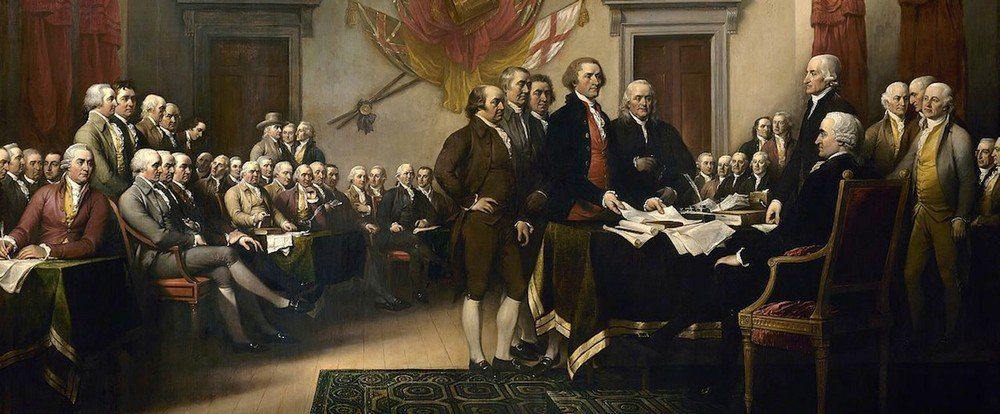
However, it wasn’t until August 2, 1776 that the Declaration was officially signed. John Hancock, president of the Congress, was the first of 56 delegates who signed this enlarged version, writing in big, bold letters.
It was on August 4, 1776, after delegates of the Continental Congress had signed the document, that The Declaration of Independence was made official.
Fourth of July Fireworks
The first fireworks were used as early as 200 BC. The tradition of setting off fireworks on the 4 of July began in Philadelphia on July 4, 1777, during the first organized celebration of Independence Day. Ship’s cannon fired a 13-gun salute in honor of the 13 colonies. The Pennsylvania Evening Post reported: “at night there was a grand exhibition of fireworks (which began and concluded with thirteen rockets) on the Commons, and the city was beautifully illuminated.” That same night, the Sons of Liberty set off fireworks over Boston Common.
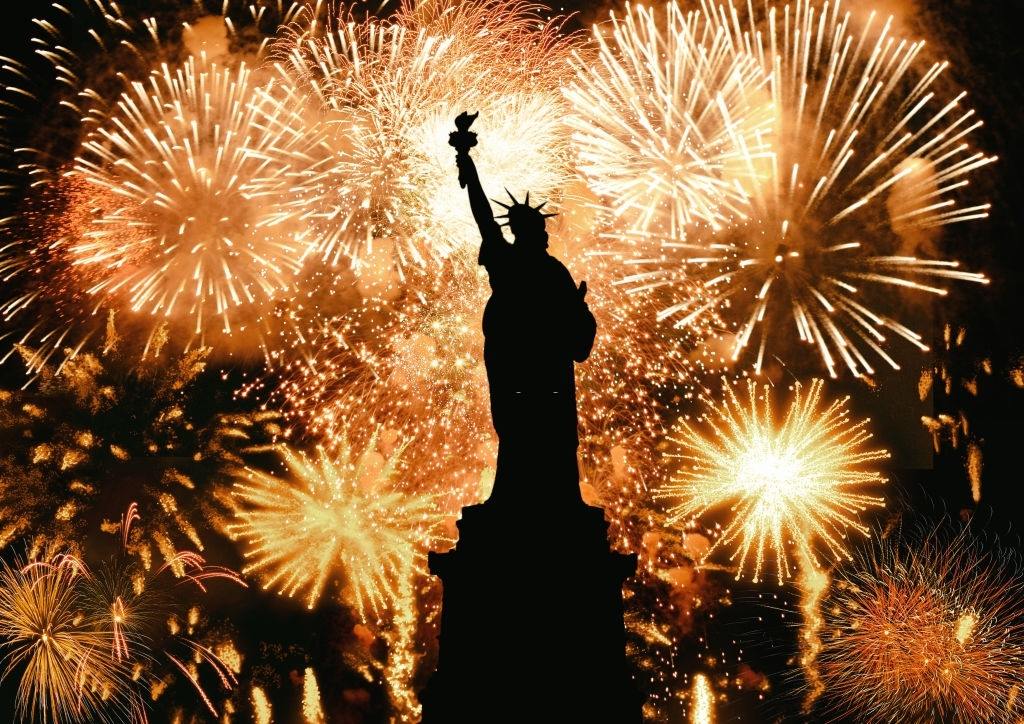
Fourth of July Becomes a Federal Holiday
The tradition of patriotic celebration became even more widespread after the War of 1812, in which the United States again faced Great Britain. In 1870, the U.S. Congress made July 4th a federal holiday; in 1941, the provision was expanded to grant a paid holiday to all federal employees.
Over the years, the political importance of the holiday would decline, but Independence Day remained an important national holiday and a symbol of patriotism.
Falling in mid-summer, the Fourth of July has since the late 19th century become a major focus of leisure activities and a common occasion for family get-togethers, often involving fireworks and outdoor barbecues. The most common symbol of the holiday is the American flag, and a common musical accompaniment is “The Star-Spangled Banner,” the national anthem of the United States.
Famous Fourth of July Speeches
Some of the most memorable words in American history were spoken on or around Independence Day. These speeches are still read aloud at July 4 events today.
| Speaker | Date | Occasion | Why it matters |
|---|---|---|---|
| John Adams (letter) | July 3, 1776 | Letter to Abigail Adams | Predicted the day would be celebrated with parades, games, bonfires and illuminations for generations. |
| Frederick Douglass | July 5, 1852 | “What to the Slave Is the Fourth of July?” in Rochester, New York | A powerful challenge to celebrate freedom honestly while millions were still enslaved. |
| Calvin Coolidge | July 5, 1926 | 150th anniversary of the Declaration of Independence, Philadelphia | Explained why the principles of the Declaration are final and cannot be improved by going backwards. |
| Lou Gehrig | July 4, 1939 | Farewell at Yankee Stadium, New York | His “luckiest man on the face of the earth” speech became one of the most famous ever given on July 4. |
Douglass deliberately spoke on July 5 rather than the Fourth. His address is now one of the most widely read speeches in American history and is often recited at Independence Day gatherings across the country.
Fourth of July Greetings and Short Poems
Want to send something on the day? Copy one of these patriotic greetings or short verses and share it with family, friends and colleagues.
Fourth of July Greetings to Share
- Our God has blessed us our Independence that is one of the most valuable gifts for us. Hopefully, we and our next generations will also be blessed with the fruits of independence. Happy Independence Day!
- Wishing you, your family, and everyone around you a blessed Fourth of July! Enjoy the fruits of Independence!
- It is high time to celebrate our freedom, our pride. Wishing everyone happy Independence Day!
- We are the land of the free and the home of the brave.
- The 4th Of July is a great day for our country and I salute the people whose sacrifices have made this possible.
- Independence is one of the valuable gifts that one can enjoy. Hope that God’s blessings are always with us so that the coming generations can also enjoy the fruits of independence. Enjoy and have a great day.
- The United States is the only country with a known birthday. All the rest began, they know not when and grew into power, they know not how…. There is no “Republican,” no “Democrat,” on the Fourth of July, — all are Americans.
- The history of free men is never really written by chance but by choice; their choice!” — Dwight D Eisenhower
- America was not built on fear. America was built on courage, on imagination, and an unbeatable determination to do the job at hand.” – Harry S. Truman
- The American, by nature, is optimistic. He is experimental, an inventor, and a builder who builds best when called upon to build greatly.” – John F. Kennedy
Short Fourth of July Poems
- When I say I am an American,
- Several emotions sweep through me.
- American is my way of life,
- And fourth of July reminds me of strife.
- For a free nation and free speech,
- My country, for you I will never breach.
- The colours blue, white and red,
- On the flag gives us the message of love,
- As there is a deep solitude today,
- It is the Independence Day,
- May there be Peace and harmony to every state!
- THE UNITED STATES will celebrate the 4th of July today, marking the signing of the Declaration of Independence. The fourth of July is also known as Independence Day and is a federal holiday across the US. Families often gather to have barbecues, picnics and celebrate being American.
- At the first celebration in 1777, fireworks lit up the sky in celebration, despite the US still in the midst of the Revolutionary War. Ever since firework displays have been held across the country.
When is Independence Day (USA)?
Independence Day (USA) is observed every year on July 4. Here are the dates for the coming years:
| Year | Date | Day of the week | Countdown |
|---|---|---|---|
| 2026 | July 4, 2026 | Saturday | Already passed |
| 2027 | July 4, 2027 | Sunday | in 241 days |
| 2028 | July 4, 2028 | Tuesday | in 607 days |
| 2029 | July 4, 2029 | Wednesday | in 972 days |
| 2030 | July 4, 2030 | Thursday | in 1337 days |
| 2031 | July 4, 2031 | Friday | in 1702 days |
Frequently Asked Questions
Independence Day is celebrated every year on July 4, the day in 1776 when the Continental Congress adopted the Declaration of Independence.
Congress made Independence Day a federal holiday in 1870.
For federal workers, the holiday moves to Friday, July 3 when the Fourth is a Saturday, and to Monday, July 5 when it is a Sunday.
It was adopted on July 4, but most delegates signed the engrossed copy on August 2, 1776.